5 Ways Cybercriminals Can Try To Extort You
When it comes to coercing people into parting with their money, cybercriminals seem to have an endless bag of tricks to choose from. There are some tricks, that they favor more than others, one of which is extortion. According to the FBI’s latest Internet Crime Report, US victims of extortion lost some US$107.5 million to these crimes last year.
One thing to keep in mind is that blackmailers won’t just stick to one trick but will employ multiple flavors of extortion to try to force their victims into doing their bidding – be it paying them a handsome sum or even performing tasks on their behalf.
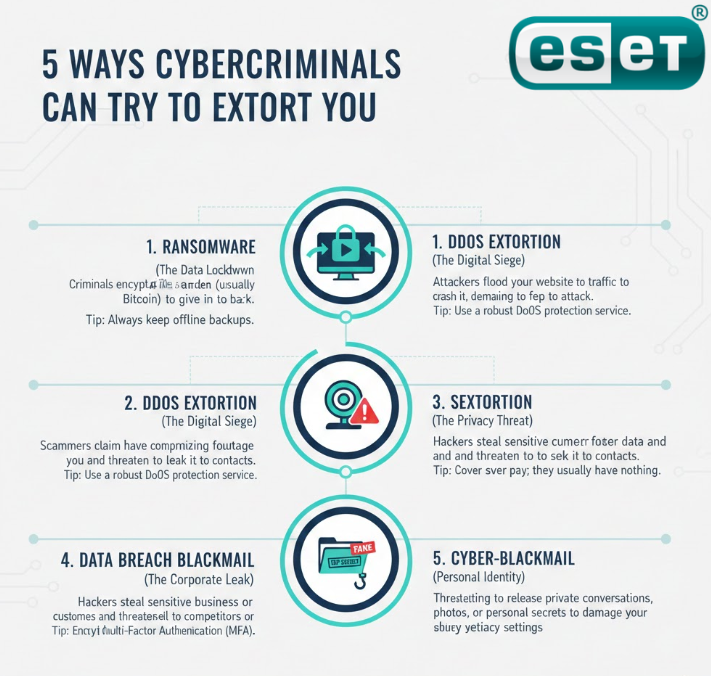
Ransomware
Ransomware is by far one of the best-known examples of extortion employed by hackers around the globe, with targets ranging from companies, through governments to individuals. The basic premise is that your device will be infested by ransomware using one of the various tactics hackers employ, such as duping you into clicking on a malicious link found in an email or posted on social media or shared with you through a direct instant message.
After the malware makes its way into your device: it will either encrypt your files and won’t allow you to access them, or it will lock you out of your computer altogether, until you pay the ransom. It is also worth mentioning that some ransomware groups have added a new functionality; a form of doxing wherein they traverse your files looking for sensitive information, which they will threaten to release unless you pay them an additional fee. This could be considered a form of double extortion.
Before wondering whether to pay or not, you should check if a decryption tool has been released for the ransomware strain that has infested your device; also, the answer is: don’t pay. For additional advice on protecting against ransomware attacks, you can check out our excellent, in-depth article Ransomware:Expert advice on how to keep safe and secure.
Hack and Extort
Sextortion Scams
DDoS Extortion
Distributed denial of service attacks (DDoS) against businesses are not uncommon and are often deployed by cybercriminals to cripple their target’s ability to provide services. Often, to boost their illegal income, they offer their services on DDoS-for-hire marketplaces. During these attacks, threat actors employ a large number of machines organized into a botnet to flood a target with requests, which leads to their systems crumbling under the onslaught, effectively taking them offline. Attacker scan keep this up for days at a time, which could for some businesses mean hundreds of thousands of dollars lost in revenue. For example, recently a cybercrime collective taking up the guise of notorious shacking groups threatened various organizations with DDoS attacks unless they paid them ransoms ranging from US$57,000 to US$227,000 in Bitcoin.
Setting up a firewall that will block access to all unauthorized IP addresses and registering with a DDoS mitigation service are just some of the steps you can take to protect yourself from DDoS extortion schemes.
In Summary